
Comprehensive protection of the metal jet from oxidation
23.05.2017
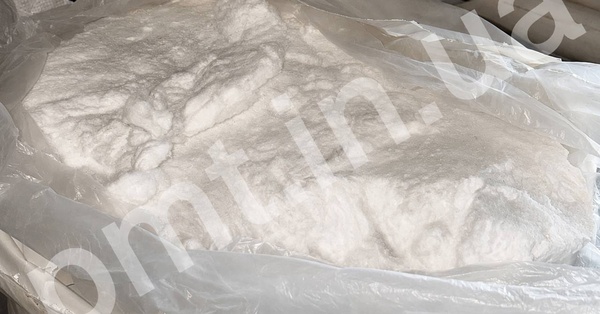
Ceramic fiber wool is made from high-quality raw materials: aluminum and silicon oxides, zirconium oxides (when used in conditions of higher temperatures) , by the method of inflation or high-speed centrifugation. Fibers have high temperature, chemical and deformation resistance. They are used for the manufacture of various ceramic products, as well as heat-insulating and heat-compensating material. It has a reduced content of coir (non-fibrous inclusions) and organic compounds. Refractory wool, due to its properties, can be used as an effective thermal compensator or insulation in the manufacture of refractory products, products of complex configuration, and also as a high-temperature gas filter. Most often, ceramic wool is made in the form of a cloth, twisted into a roll and packed in polyethylene bags or packages.
Specific physical and chemical properties of thermal insulation wool depend on the brand, at the same time, all types of this material are characterized by chemical resistance to the action of alkalis and acids, high resistance to thermal shocks, excellent electrical insulating properties. Cotton wool fibers are resistant to any temperature changes in oxidizing and neutral environments. However, in a reducing environment, heat-insulating properties decrease. Thanks to its extraordinary elasticity, ceramic wool tightly adheres to the structures to be protected. The material is also resistant to increased vibration and deformation and acts as an excellent sound insulator.
LLC "Promatechnologies" offers cotton wool with the following advantages:
Application
Types of products
Main technical characteristics
| Unit. ex. | LYTX - 211 (obtained by the method bloating) |
LYTX - 211L (garnuli-rovana) |
LYTX - 311 (obtained by the method centrifugation) |
LYTX - 511 (obtained by the centrifugation method) |
LYTX - 211F (textile) |
|
| Application temperature: maximum working |
°C | 1050 950 |
|
1260 1100 |
1400 1360 |
1260 1100 |
| Coefficient of thermal conductivity at 6000С | W/m*K | 0.13 - 0.16 | 0.13 - 0.16 | 0.13 - 0.16 | 0.13 - 0.16 | 0.13 - 0.16 |
| Fiber diameter | μm | 2 - 4 | 6 - 20* | 3 - 5 | 3 - 5 | 3 - 5 |
| Content of non-fibrous compounds (corolla) | % | < 15 | <12 | <15 | <15 | <10 |
| Burning losses | % | 0.8 - 1.2 | 0.8 - 1.2 | 0.8 - 1.2 | 0.8 - 1.2 | 0.8 - 1.2 |
| Chemical composition: Al2O3 ZrO2 Al2O3 + SiO2 Al2O3 + SiO2 + ZrO2 |
% | > 44 --- >96 --- |
> 45 --- > 97 --- |
> 45 --- > 97 --- |
38 - 40 15 - 17 --- > 99 |
> 45 --- > 97 --- |
* - granule size (mm) is indicated